



Contents hide 1 What Exactly Happens When You Grind Your Teeth? 2 How Is Grinding During Sleep Different from Daytime Jaw Clenching? 3 How Do You Know
Bruxism Treatment Guiseley
28th May 2026
Bruxism treatment at One Two Three Dental in Guiseley begins with a thorough clinical assessment to confirm whether teeth grinding or jaw clenching is causing damage to your teeth and jaw. According to the Bruxism Association UK, 8% to 10% of adults experience sleep bruxism. A 2024 global meta-analysis in the Journal of Clinical Medicine found overall bruxism prevalence, including daytime jaw clenching, to be 22.22% of the population. If left unmanaged, bruxism causes permanent enamel wear, cracked fillings, temporomandibular joint pain, and persistent headaches. A custom-fitted dental splint, worn during sleep, is the most widely used first-line approach for protecting the teeth from the damage that grinding causes.
What Exactly Happens When You Grind Your Teeth?
Teeth grinding and jaw clenching involve involuntary rhythmic contractions of the masseter muscles, producing excessive force against the tooth surfaces. The behaviour is almost always subconscious, affects people of all ages, and is classified as a parafunctional oral activity rather than a disease.
The clinical term bruxism describes both the grinding motion, in which the teeth move back and forth against each other, and the clenching motion, in which the teeth are held together under sustained pressure without lateral movement. Both produce damaging forces on the tooth enamel, jaw joint, and surrounding muscles.
Bruxism is widely considered underdiagnosed. Many people grind during sleep and are completely unaware of it until a dentist identifies the characteristic wear patterns during a routine examination, or until symptoms such as morning jaw soreness and headaches become difficult to ignore. A partner hearing the grinding sound during the night is frequently the first indication.
How Is Grinding During Sleep Different from Daytime Jaw Clenching?
Sleep bruxism involves involuntary jaw muscle contractions and tooth grinding that occur during sleep, of which the person is usually entirely unaware. Awake bruxism is an unconscious daytime habit involving jaw clenching rather than grinding. Both can cause long-term dental damage and both respond to the same protective management approach.
Sleep bruxism occurs most commonly during lighter stages of sleep rather than deep sleep. The brain triggers rhythmic jaw muscle contractions without the person having any conscious awareness of it. A partner, parent, or sibling noticing the grinding sound at night is frequently the first indication.
Awake bruxism most commonly involves clenching the teeth together rather than the lateral grinding associated with sleep. It is typically triggered by concentration, stress, anxiety, or physical exertion. Many patients are entirely unaware they are clenching until a dentist points out the corresponding wear patterns.
Both forms, sleep bruxism characterised by involuntary grinding during sleep, and awake bruxism characterised by unconscious jaw clenching during waking hours, can cause the same long-term dental consequences if left unmanaged. Under the 2013 international consensus, bruxism is classified as a behaviour rather than a disorder, which is an important clinical distinction.
How Do You Know If You Are Grinding Your Teeth at Night?
Common signs of teeth grinding include a sore or aching jaw on waking, dull headaches behind the eyes, worn or flattened tooth surfaces, cracked fillings, increased tooth sensitivity, ear pain unrelated to an ear problem, and disrupted sleep. A partner hearing a grinding or squeaking sound during sleep is one of the most common ways the condition is first identified.
Because the behaviour is largely unconscious, many patients only become aware of it when a dentist identifies the signs during a routine examination, or when symptoms become too persistent to ignore.
Signs identified at a dental examination:
- Worn, flattened, or chipped tooth enamel
- Cracked or broken fillings
- Increased tooth sensitivity, particularly to cold or hot temperatures
- Shortened or flattened tooth surfaces compared to normal
- Cheek tissue marks from sustained clenching
Symptoms noticed by the patient:
- Jaw, neck, or facial pain or stiffness, particularly on waking in the morning
- Dull headaches, most often felt behind the eyes, present on waking
- Ear pain not caused by an ear problem. The muscles and joints involved sit close to the ear canal and the strain can radiate into the ear
- Disrupted or unrefreshing sleep
- Soreness inside the cheeks caused by sustained clenching
- A partner, parent, or housemate reporting a grinding or squeaking sound during the night
If you have noticed any of these signs, a dental check-up at One Two Three Dental is the right starting point. Wear patterns from teeth grinding can often be identified before symptoms become severe, which is why routine examinations matter.
What Long-Term Harm Does Jaw Grinding Cause to Your Teeth?
Untreated teeth grinding causes progressive and permanent damage including enamel erosion, cracked fillings, broken crowns, and in severe cases tooth fractures requiring extraction. Temporomandibular joint pain, persistent headaches, and gum recession can also develop over time. Enamel cannot regenerate once worn away, making early assessment important.
The consequences accumulate gradually, which is one reason patients often underestimate the severity of the problem until significant damage has already occurred.
Damage to the teeth:
Enamel is the hardest substance in the human body but it cannot regenerate once it is lost. The repeated grinding forces progressively erode enamel, making teeth more sensitive, more vulnerable to decay, and more prone to fracture. Fillings crack and break under the abnormal forces and require repeated replacement. Dental crowns can fracture or debond. In severe and long-standing cases, tooth fractures can occur at a level that makes the tooth unrestorable, requiring tooth extraction.
Damage to the jaw and surrounding structures:
The masseter and temporalis muscles can become chronically enlarged and tender from overuse. The temporomandibular joint can develop pain, clicking, and limited movement over time. Persistent headaches and facial pain can become a daily experience when grinding is severe.
Gum recession:
In some patients the abnormal lateral forces associated with bruxism contribute to gum recession, exposing the root surfaces of the teeth and increasing sensitivity.
All of these consequences are preventable with early management. Enamel lost to grinding cannot be restored to its original state. This is the core clinical reason a protective dental splint is recommended.
Why Do Some People Grind and Clench Their Teeth?
The precise cause of teeth grinding is not fully established. Recognised contributing factors include psychological stress and anxiety, a misaligned bite, sleep disorders such as sleep apnoea, and certain medications. Stress is the most commonly cited trigger in clinical literature, accounting for approximately 70% of sleep bruxism cases according to NHS clinical sources.
- Psychological stress and anxiety: The most widely cited trigger. Approximately 70% of sleep bruxism cases are thought to be related to stress and anxiety according to NHS clinical sources. Stress increases the frequency and intensity of both sleep and awake grinding episodes.
- Misaligned bite: An uneven bite, known clinically as malocclusion, can place abnormal forces on the teeth and jaw, contributing to grinding and clenching as the jaw seeks a comfortable resting position.
- Sleep disorders: Sleep apnoea is clinically associated with sleep bruxism. Disrupted breathing patterns during sleep are believed to activate the jaw muscles as part of the body’s arousal response to airway obstruction.
- Certain medications: Some antidepressants, particularly selective serotonin reuptake inhibitors (SSRIs), are associated with bruxism as a side effect. If you have recently started a new medication and noticed new jaw grinding symptoms, raise this at your dental examination.
- Genetic factors: Bruxism is observed to run in families, suggesting a genetic predisposition in some individuals.
- Lifestyle factors: Caffeine and alcohol consumption, particularly in the evening, are both clinically associated with increased bruxism activity according to StatPearls NCBI 2024. Smoking is also listed as a contributing risk factor.
Understanding what may be contributing to your jaw grinding is part of the clinical assessment at One Two Three Dental. Where a modifiable lifestyle factor is identified, addressing it alongside dental management produces the best overall outcome.
How Does a Dentist Identify Jaw Grinding at a Check-Up?
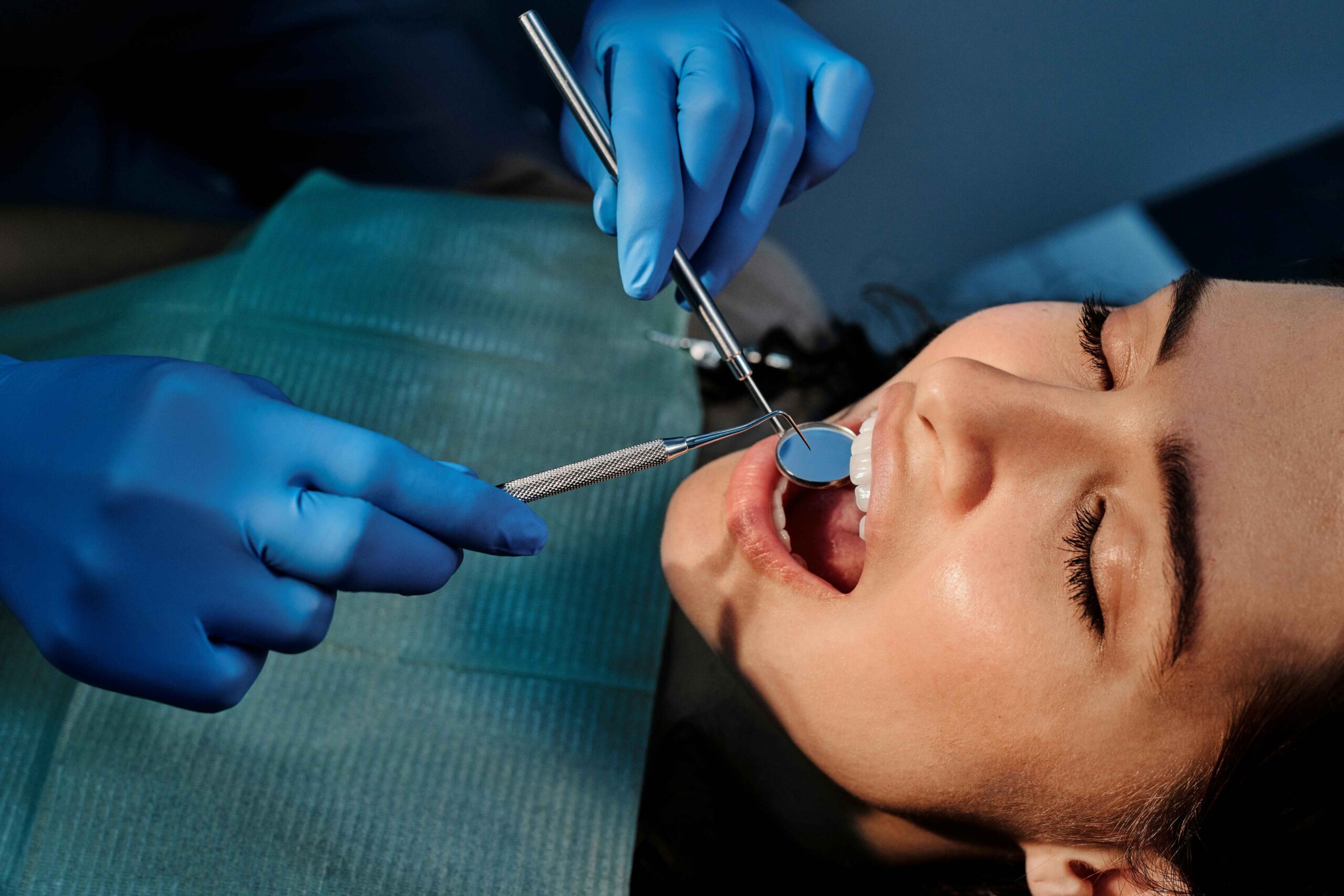
Teeth grinding is identified during a dental examination through visual inspection of enamel wear patterns, assessment of the jaw muscles and joint for tenderness, and a clinical history covering symptoms, stress levels, sleep habits, and medications. X-rays may be taken to assess the extent of damage beneath the tooth surface.
At One Two Three Dental in Guiseley, an assessment for jaw grinding involves the following:
- Visual examination of the teeth: Your dentist looks for characteristic wear patterns on the biting surfaces, chips, cracks, and areas of enamel loss consistent with grinding. These patterns are recognisable and distinct from other types of tooth wear.
- Assessment of the jaw muscles and joint: Your dentist gently presses on the masseter and temporalis muscles to check for tenderness and assesses the range of movement of the jaw. Any clicking, deviation, or limitation in opening is noted.
- Clinical history: Your dentist will ask when symptoms started, whether a partner has reported grinding sounds, how well you sleep, your current stress levels, and which medications you are taking.
- What to tell your dentist: Come prepared to describe your symptoms, when jaw soreness and headaches started, whether they are worse on waking, whether a partner has noticed grinding, any recent medication changes, and any changes to your stress levels. This information directly shapes the management approach.
- X-rays if required: X-rays allow your dentist to assess the full extent of damage, including to the roots and supporting bone, that may not be visible on the surface.
No referral is required. Jaw grinding is assessed and managed within the practice at One Two Three Dental in Guiseley. A routine dental check-up is the most straightforward starting point if you have concerns.
Is There a Link Between Jaw Pain and Teeth Grinding?
Yes. Teeth grinding and jaw clenching place repeated strain on the temporomandibular joint, which connects the lower jaw to the skull. This sustained pressure can cause jaw pain, clicking, stiffness, and difficulty opening the mouth fully. A protective dental splint helps reduce the load placed on the joint during sleep over time.
The temporomandibular joint is used every time you open and close your mouth, speak, chew, or yawn. The sustained forces generated by grinding place significant strain on this joint, and over time this can lead to a recognised condition called temporomandibular joint disorder.
Symptoms suggesting the joint is being affected include pain or tenderness in the jaw on one or both sides, a clicking or popping sound when opening or closing the mouth, stiffness in the jaw on waking, difficulty opening the mouth fully, earache, or facial pain spreading from the jaw area.
A custom dental splint reduces the grinding forces transmitted to the joint during sleep. In cases where symptoms are complex or severe, your dentist may discuss onward referral to a specialist.
Which Management Options Have the Strongest Clinical Evidence?
The most widely used management option for teeth grinding is a custom-fitted occlusal splint, which protects the teeth from damage during sleep. Other options with clinical evidence include Botulinum Toxin Type A injections in specialist settings, and Mandibular Advancement Devices where sleep apnoea is also present.
Occlusal Splints and Dental Splints
Occlusal splints are the most widely used and most accessible first-line management option. A 2024 systematic review in the journal Medicine, covering studies from 2019 to 2024, confirms that occlusal splints are widely studied and used to reduce nighttime muscle activity and distribute occlusal forces. A separate PubMed systematic review found there is currently insufficient evidence to confirm that occlusal splints definitively reduce bruxism activity itself compared to other interventions. What is consistently supported is their effectiveness at protecting the teeth from the dental damage grinding causes.
In practical terms: a dental splint will not stop the grinding, but it will protect your teeth from the permanent consequences of grinding. Custom-fitted appliances provide a more precise fit and better protection than over-the-counter options.
Botulinum Toxin Type A
A 2024 systematic review published on PMC, covering 9 randomised clinical trials involving 137 participants, found support for Botulinum Toxin Type A injections into the masseter muscle in reducing pain and improving jaw function in sleep bruxism. A separate NCBI review notes that scarce strong evidence exists to support this as a routine treatment. Botox for jaw grinding is carried out in specialist or aesthetic dental settings and is not a standard first-line treatment in general dental practice.
Mandibular Advancement Devices
Mandibular Advancement Devices are used primarily where sleep apnoea is present alongside jaw grinding. By reducing airway obstruction during sleep they can reduce the arousal responses that contribute to sleep bruxism episodes.
Stress Management and Relaxation
Stress management, including counselling, cognitive behavioural therapy, relaxation exercises, and sleep hygiene improvements, is recommended as a first step by NCBI clinical guidance where stress is an identified trigger. The same guidance notes this approach is generally considered not harmful, despite low evidence of any direct efficacy in isolation. NHS Talking Therapies provides free access to CBT and counselling for those managing stress and anxiety in England.
How Does a Custom Dental Splint Protect Against Grinding?
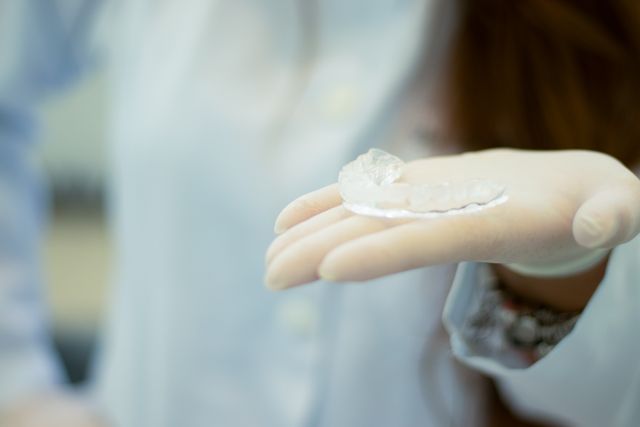
A custom dental splint is a hard or soft occlusal appliance made from precise impressions of your own teeth. Worn during sleep, it creates a protective barrier between the upper and lower teeth so that grinding forces are absorbed by the splint rather than wearing down the enamel.
Here is how the process works at One Two Three Dental in Guiseley:
- First appointment: impressions. Your dentist takes precise impressions of your upper and lower teeth. These are used to create an accurate model of your mouth on which the splint will be fabricated.
- Laboratory fabrication. The impressions are sent to a dental laboratory where a custom splint is made to fit the exact contours of your teeth. This precision fit is what distinguishes a dentist-made appliance from an over-the-counter option.
- Second appointment: fitting. When the splint is returned from the laboratory, you attend the practice for a fitting appointment. Your dentist checks the fit, makes any adjustments needed, and explains how to insert, remove, and clean it.
- Material selection. Your dentist advises on whether a hard acrylic splint or a softer appliance is most appropriate based on the severity of your grinding. Hard acrylic guards are typically recommended for heavier grinders.
Important clinical distinction: a dental splint protects the teeth from damage caused by grinding during sleep but does not stop the grinding behaviour itself. It manages the consequences rather than the cause. This is worth understanding clearly so expectations are realistic from the outset.
The splint must be cleaned daily with a soft brush and mild soap, stored in the protective case provided when not in use, and reviewed at routine check-up appointments so your dentist can monitor it for wear. After the fitting, an adjustment period of a few nights is entirely normal. Most patients adapt to sleeping with the splint within one to two weeks.
Is a Guard From a Dentist Better Than One Bought Online or Over the Counter?
Over-the-counter and online guards provide a generic fit. A poorly fitting appliance can cause jaw discomfort and may worsen alignment over time. A dentist-made splint uses precise impressions of your own teeth, providing superior protection and comfort for patients with moderate to heavy grinding.
| Option | Approximate Cost | Fit | Best Suited For |
|---|---|---|---|
| Over-the-counter boil-and-bite | £5 to £30 | Generic | Very light, occasional grinding |
| Online mail impression kit | £50 to £130 | Moderate | Light to moderate grinding |
| Custom from dentist | £150 to £600 | Precise | Moderate to heavy grinding and TMJ concerns |
For patients with moderate to heavy jaw grinding, or any signs of TMJ involvement, a dentist-made custom splint is the clinically appropriate choice. Over-the-counter options are not designed to manage the sustained forces associated with significant bruxism and may provide inadequate protection.
The long-term cost of dental repairs from unprotected grinding, including repeated fillings, crowns, and in severe cases extractions and tooth replacement, typically outweighs the cost of a professionally fitted splint by a considerable margin. Finance options are available at One Two Three Dental to spread the cost into manageable monthly payments.
What Does a Privately Made Dental Splint Cost in the UK?
A custom dental splint from a private dentist in the UK typically costs between £150 and £600 depending on the type of appliance, the materials used, and the practice location. The exact cost at One Two Three Dental will be confirmed following your assessment. Please contact us for a personalised quote.
Soft splints sit at the lower end of the range and are suitable for lighter grinders. Hard acrylic splints, which are more durable and provide stronger protection for heavier grinders, sit at the higher end. For context, the NHS Band 3 cost for a custom dental guard in England is approximately £326.70 as of 2025, though NHS dental access varies significantly by area and waiting times can be considerable.
At One Two Three Dental, all costs are confirmed before treatment begins in line with our Fair Price Charter. There are no hidden charges. Patients on our membership plan receive a discounted rate on treatment. 0% finance options are available to spread the cost into manageable monthly payments.
Which Daily Habits Make a Meaningful Difference to Jaw Grinding?
Reducing caffeine and alcohol intake, particularly in the evening, is clinically associated with reduced bruxism activity. Managing stress actively through exercise, relaxation techniques, or talking therapies may also help. Sleeping on your back rather than your side or stomach reduces jaw pressure during sleep.
- Reduce caffeine and alcohol in the evening. Both are clinically associated with increased bruxism activity according to StatPearls NCBI 2024. Caffeine increases arousal and disrupts sleep stages. Alcohol disrupts sleep architecture and increases muscle activity during sleep.
- Reduce or stop smoking. Smoking is listed as a contributing risk factor for jaw grinding. Cessation benefits bruxism management as well as overall oral and general health.
- Manage stress actively. Where stress is an identified trigger, addressing it directly reduces grinding frequency. Practical options include regular exercise, guided relaxation, mindfulness, cognitive behavioural therapy, and NHS Talking Therapies.
- Consider your sleep position. Back sleeping is preferable to side or stomach sleeping, which increases jaw pressure during sleep.
- Avoid excessive chewing gum use. Overusing the jaw muscles through habitual gum chewing adds to fatigue in the masseters, which can contribute to grinding episodes.
These adjustments complement dental management with a splint. They are most effective when combined with, rather than used instead of, a clinical assessment and professionally fitted protection.
Will Jaw Grinding Resolve Without Professional Management?
In children, teeth grinding often resolves naturally as the teeth develop and the bite settles. In adults, jaw grinding is unlikely to stop without some form of management, and the dental damage it causes continues to accumulate in the meantime. Early protection preserves tooth structure that cannot be restored once lost.
In children: Jaw grinding is very common during dental development. StatPearls NCBI 2024 reports that sleep bruxism affects between 15% and 40% of children, a significantly higher rate than in adults. In the majority of cases it reduces and resolves naturally as the permanent teeth come through and the bite establishes itself.
In adults: Grinding in adults tends to fluctuate rather than resolve. Many patients notice it worsens during periods of high stress and eases during calmer periods. However it is unlikely to stop entirely without some form of management. Enamel does not grow back. Every period of unprotected grinding represents permanent loss that accumulates.
A protective dental splint during any period of uncertainty, whether the grinding appears to be improving or not, ensures the teeth are protected regardless of what the underlying behaviour is doing.
Is Jaw Grinding in Children and Teenagers Something to Worry About?
Jaw grinding is common in children, affecting between 15% and 40% according to StatPearls NCBI 2024. In most cases it resolves naturally as the permanent teeth come through. A dentist should be consulted if grinding is causing visible tooth damage, jaw pain, or significant sleep disruption.
- What to watch for: Grinding sounds during sleep, visible wear or chipping on the teeth, complaints of jaw soreness or headaches in the morning, or disrupted sleep.
- Dental splints in children: Splints are not routinely fitted for young children whose teeth are still developing. For older children and teenagers where grinding is causing measurable dental damage, your dentist will advise on whether a soft appliance is appropriate.
- When to see a dentist: If grinding is accompanied by jaw pain, visible tooth damage, or significant sleep disruption, a dental examination should be booked rather than waiting. Early identification means any damage can be monitored before it becomes more significant.
What Is the Most Important First Step If You Suspect Jaw Grinding?
If you notice any of the signs of teeth grinding, the most important first step is to book a dental examination. Your dentist can identify wear patterns and damage before they become severe and confirm whether a custom dental splint or other management is appropriate for your situation.
Do not wait for symptoms to become severe before acting. Because enamel loss is permanent, every period of unprotected grinding represents damage that cannot be reversed later. The earlier jaw grinding is identified and managed, the more natural tooth structure can be preserved.
If a partner is regularly mentioning grinding sounds during the night, take it seriously and book sooner rather than later. Partners are frequently more aware of the severity of sleep grinding than the person themselves.
To make the most of your appointment, tell your dentist: when symptoms started, whether jaw soreness and headaches are worse on waking, whether a partner has noticed grinding sounds, any recent changes to medication, and any changes to your stress levels. This information directly shapes the management approach recommended for you.
Getting a dental splint fitted at One Two Three Dental is a two-appointment process. Impressions at the first appointment, fitting and adjustment at the second. No referral required. Book a dental examination to get a clear clinical picture of whether jaw grinding is affecting your teeth.
Why Visit One Two Three Dental in Guiseley for a Jaw Grinding Check?
At One Two Three Dental in Guiseley, jaw grinding is assessed through a thorough clinical examination followed by a clear, jargon-free explanation of the findings and the management options available. Custom-fitted dental splints are provided within the practice, and sedation is available for patients who experience anxiety about dental appointments.
Our approach begins with listening. We take the time to understand your symptoms, how long they have been present, and what may be contributing to them. Any treatment recommended is discussed fully before it begins. No treatment is ever carried out without your understanding and consent.
For patients who feel anxious about dental appointments, our nervous patient team is experienced in making visits as comfortable as possible. Sedation is available for patients who need additional support.
All costs at One Two Three Dental are confirmed before treatment begins in line with our Fair Price Charter. Finance options are available to spread the cost of treatment into affordable monthly payments.
Book a Jaw Grinding Assessment in Guiseley
If you wake with a sore jaw, morning headaches, or a partner has mentioned grinding sounds during the night, contact our Guiseley team to book an assessment. The enamel worn away by jaw grinding cannot grow back. Early management protects what cannot be replaced.
If cost is a concern, ask about our 0% finance options when you get in touch. You can also book a dental check-up as a first step if you are unsure whether what you are experiencing is jaw grinding.