


Why Dental Bridges Are the Ideal Solution for Missing Teeth?

Missing a tooth can feel like more than just a gap in your smile; it is a disparity to your confidence, daily habits, and your long-term oral health. There are several ways to replace teeth, but dental bridges are among the most trusted, time-honored, and patient-friendly solutions. If you are considering dental bridges in Guiseley, this guide will provide you with a new perspective on why dental bridges may suit your needs and how to maintain their strength and beauty for years.

Types of Dental Bridges: What Are Your Options?

When most people think of a bridge, they imagine one fixed solution—but did you know there are actually several types? Based on the position of your missing tooth, the condition and health of the teeth alongside and/or adjacent to the space as well as patient preference, your dentist in Guiseley may offer a variety of the following options:

🔹 Traditional Fixed Bridge

The most common type, this uses crowns on the two healthy teeth on either side of the gap, supporting a false tooth (pontic) in between.

🔹 Cantilever Bridge

Used when only one adjacent tooth is available to support the bridge. While effective, it’s best for areas with less chewing pressure (like front teeth).

🔹 Maryland Bridge

Also called a resin-bonded bridge, this uses a metal or porcelain “wing” bonded to the backs of neighbouring teeth. Less invasive, but not as strong for back teeth.

🔹 Implant-Supported Bridge

Instead of being supported by your natural teeth, this bridge is anchored to dental implants. It is a good solution for a situation in which several teeth are missing in a row and you do not want to involve the adjacent natural teeth.

Your dentist in Guiseley will assess which type best suits your unique smile and functional needs.

Are You a Good Candidate for a Dental Bridge?
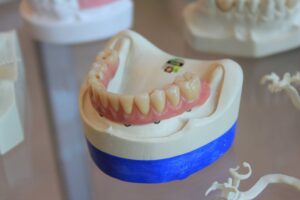
Dental Bridges Are the Ideal Solution for Missing Teeth

Bridges aren’t a one-size-fits-all solution. However, many people are excellent candidates. You might be a good fit if:

  • You have one or more adjoining teeth missing.
  • The neighboring teeth are healthy and strong (or can be restored).
  • You want a non-removable solution.
  • You are not a ready candidate for dental implants.
  • You need a quicker option than implant surgery.
  • Your team commitment is high regarding your oral hygiene.

At One Two Three Dental, our experienced Guiseley dentist will conduct an overall assessment to decide if a bridge is the best option for you or another treatment would be the best suited.

Also Read: Pain-Free Root Canal? How Leeds Clinics Are Using Modern Technology to Transform the Experience

Dental Bridges vs Implants vs Dentures: What’s the Difference?

To choose the right solution, it helps to understand how dental bridges compare to other common treatments.

Feature Dental Bridge Dental Implant Denture
Fixed or Removable Fixed Fixed Removable
Invasive? Minimally invasive Requires surgery Non-invasive
Longevity 10–15 years 15–25+ years 5–8 years
Looks Natural? Yes Yes Varies
Time to Complete 2–3 weeks 3–6 months 2–4 weeks
Preserves Bone? No Yes No
Cost Moderate Higher Lower

While implants are longer-lasting and preserve bone, they’re not ideal for everyone. Bridges offer a balanced solution, especially if you’re looking for something quicker, non-surgical, and still fixed and natural-looking.

How Long Do Dental Bridges Last?

On average, dental bridges can last 10 to 15 years and sometimes even longer with great care. Their lifespan depends on several factors:

  • The materials used (porcelain, zirconia, metal-ceramic, etc.)
  • Your oral hygiene habits
  • Regular dental checkups
  • Your diet (avoiding very hard or sticky foods)
  • Whether you grind your teeth (bruxism)

The good news? With regular visits to your Guiseley dentist and a consistent at-home routine, you can maximise the longevity of your dental bridge.

Also Read: Early Signs of Gum Disease: What to Watch for Before It Gets Serious

Caring for Your Dental Bridge: Daily Maintenance Tips

A bridge may be fixed, but that doesn’t mean it’s maintenance-free. Here’s how to care for it:

Brush Twice Daily

Use a soft-bristled toothbrush and fluoridated toothpaste to brush around the bridge just like you would on natural teeth.

Floss Under the Bridge

Use floss threaders or an interdental brush to clean underneath the false tooth where food particles can get trapped. 

Watch What You Eat

Avoid biting into hard things like ice, nuts or pen caps. Minimize chewy or sticky foods that could loosen or stress your bridge.

Visit Your Guiseley Dentist Regularly

Regular dental visits allow your dentist to detect concerns with your bridge or supporting teeth before we run into an expensive problem.

Are There Any Risks or Limitations?

While dental bridges are safe and effective, it is important to be aware of the following potential downsides: 

  • Risk to adjacent teeth: These teeth are reshaped to hold crowns in place; if properly cared for this will weaken the adjacent neighboring teeth.
  • Not suitable for large gaps: Bridges are designed for one to three missing teeth. Larger gaps may need implants or some other option.
  • Bone loss continues: Because there is no root underneath the false tooth, the bone there will continue to resorb slowly as time goes on.

This is why your consultation with an experienced dentist in Guiseley is so important to ensure that treatment is appropriate for your needs, and perhaps the needs of the long-term. 

What Does a Dental Bridge Typically Cost?

Cost can vary depending on the type of bridge, materials used, and whether other treatments (like crowns or root canals) are needed prior to completing the bridge.

Generally, dental bridges are a mid-range investment. They are typically not as expensive as implants and more expensive than removable dentures. While we do not post prices online, we always provide clear and upfront treatment plans that do not have hidden surprises at One Two Three Dental.

Why Choose One Two Three Dental for Dental Bridges in Guiseley?

For dental bridges Guiseley residents trust, One Two Three Dental is well known for having not just clinical excellence. 

  • We use advanced materials and digital accuracy to provide our patients with realistic long-lasting results
  • We always take the time to hear your concerns, explain all options, and support you at every stage of the process.
  • As a trusted dentist in Guiseley that you can trust, we are committed to providing local care with big results.
  • Our practice provides comfort, convenience and compassion to ensure your experience is stress-free.

Final Thoughts: Is a Dental Bridge Right for You?

If you are missing a tooth or several, a dental bridge can offer a fixed, functional, and natural-looking solution that enhances your smile and protects your oral health.

Not sure if it’s right for you? That’s exactly what we’re here for.

Book Your Consultation with One Two Three Dental Today

Don’t let a missing tooth keep holding you back. Talk to our expert dentist in Guiseley and explore your options for dental bridges Guiseley residents rely on for confidence and quality.

📞 Call One Two Three Dental or book online to get started. Let’s restore your smile together.

Is Teeth Whitening Safe? A Dentist’s Perspective on Risks, Ingredients & Regulations

Teeth whitening has quickly become one of the most requested cosmetic treatments in the UK, whether it is for an event or job interview or just to feel good and confident about yourself, people are seeking out to have a better smile by brightening or creating a whiter smile. But one of the most frequent questions we get asked here at our Guiseley dental practice is ” Is teeth whitening safe?”

Yes, teeth whitening can be safe, but it depends on how it’s performed and whether the whitening products are the correct products being used and the whitening procedures are supervised or performed by a dental professional. As a dentist in Guiseley, providing a deep, real honest medical opinion and perspective is very important. Therefore we will take a look at; risks involved with whitening, whitening ingredients, regulations, and safe whitening methods prior to brightening your grin.

What Makes Teeth Whiter?

Teeth Whitening_One Two Three Dental

Teeth whitening products work by using active ingredients to break down stains on the enamel. The two most common ingredients are:

  • Hydrogen Peroxide
  • Carbamide Peroxide

These bleaching agents release oxygen molecules that help lift deep-set stains from the tooth’s surface. While they’re effective, their safety depends on the concentration and how they’re used.

Hydrogen Peroxide Teeth Whitening Safety

When used correctly and within safe limits, hydrogen peroxide is safe for tooth whitening. However, too much of it or leaving it on your teeth for too long can cause sensitivity, enamel damage, or gum irritation.

Carbamide Peroxide Whitening Safety

Carbamide peroxide is a gentler, slower-acting compound. It breaks down into hydrogen peroxide, but over a longer period, which makes it safer for at-home treatments — when prescribed by a dentist.

So, Is Teeth Whitening Safe?

Yes, when:

✅ You are using dentist approved products
✅ You had an examination to make sure your teeth and gums are healthy
✅ The procedure was performed under professional supervision
✅ You avoided techniques that were illegal or dangerous.

No, when:

❌ You purchase whitening kits online without knowledge of the ingredients
❌ You go to salons or unlicensed practitioners
❌ You follow DIY whitening ideas that will damage your enamel
❌ You ignore dental issues like decay or gum disease before whitening

Also Read: Say Goodbye to Stains: The Many Advantages of Professional Teeth Whitening

A Dentist’s Perspective on Teeth Whitening Risks

At One Two Three Dental, located in Guiseley, we take a careful and personalized approach to all our cosmetic treatments. While the safety of professional teeth whitening is well-established, it does not mean this is risk-free.

Here are the most common teeth whitening side effects we discuss with patients:

  • Tooth sensitivity: Some people experience a “zing” feeling during or after treatment. It usually fades in a day or two. 
  • Gum irritation: Whitening gel should never touch your gums. This is why a custom-made tray (not a one-size-fits-all kit) is so important. 
  • Uneven whitening: If you have crowns, veneers, or fillings, they won’t whiten like natural teeth, leading to inconsistent results. 
  • Overuse damage: Repeated whitening without breaks can lead to enamel thinning or long-term sensitivity. 

We always evaluate your oral health in Guiseley before starting any whitening treatment to avoid these problems.

Safe Teeth Whitening Methods: What We Recommend

If you are looking for safe teeth whitening treatments in the Guiseley, Leeds, UK, here’s what we offer and trust:

1. In-Practice Whitening

This is the quickest and considered the most effective way to whiten teeth. At our Guiseley dental practice, we use dentist approved whitening systems with clinically controlled hydrogen peroxide concentrations. You’ll see quick results and it’s all done in safe, controlled conditions to protect your teeth and gums. 

2. Custom At-Home Whitening Kits (Prescribed by Us)

These kits use carbamide peroxide at a lower concentration, to be worn in soft comfort fit trays for a prescribed number of hours each day. Because the trays are made to fit your teeth, there is much less risk of gum contact or overexposure. This method is a great option for individuals who would like to gradually whiten their teeth, safely at home.

3. Avoid Over-the-Counter Whitening Kits

Many over-the-counter teeth whitening products in the UK are simply ineffective. They contain very low levels of bleaching agents, because legally they can’t contain more than 0.1% hydrogen peroxide unless prescribed by a dentist. Some may even use abrasive substances that damage enamel.

Teeth Whitening Regulations in the UK

One of the most important things to understand is that UK teeth whitening regulations are strict and for good reason.

Only qualified dental professionals can provide whitening treatments that contain more than 0.1% hydrogen peroxide. That means beauty salons, online influencers, and some high-street “clinics” offering whitening services are operating illegally.

Here’s what the law says:

  • Whitening treatments must be prescribed by a dentist after a full dental exam 
  • Patients must be 18 or older 
  • Products must be CE-marked and within safe concentration limits 
  • Only a registered dental professional can apply or oversee treatment

If someone is offering to whiten your teeth without checking your oral health first, walk away. It’s not worth the risk.

Professional vs DIY Teeth Whitening: The Real Difference

You may have seen people using charcoal toothpaste, baking soda, lemon juice etc online to “naturally” whiten their teeth. We get it DIY techniques are cost effective, quick, and seem harmless. But the reality is:

  • Charcoal is abrasive and can wear away enamel 
  • Baking soda doesn’t whiten, it just removes surface stains temporarily
  • Lemon juice is acidic and can permanently damage tooth enamel

When comparing professional vs DIY teeth whitening, the difference isn’t just about results — it’s about protecting your enamel, your gums, and your long-term oral health.

Also Read: Whitening Your Teeth Naturally: Does Charcoal, Coconut Oil, or Baking Soda Actually Work?

How Safe Is Teeth Whitening for Enamel?

This is one of the most important questions we get:
“Will whitening damage my enamel?”

If done correctly, no, whitening won’t damage healthy enamel. Enamel is the hard outer layer of your tooth — but once it’s worn down, it doesn’t grow back.

That’s why we:

  • Examine your enamel before whitening 
  • Avoid aggressive treatments 
  • Use fluoride or desensitising gels to protect teeth 
  • Give you professional advice on maintenance and care

If you are already experiencing sensitivity or have signs of enamel wear, we may recommend alternatives such as safe cosmetic dentistry options like veneers or a smile makeover in Guiseley.

Long-Term Effects of Teeth Whitening

Used responsibly and under guidance, whitening is safe in the long term. But if abused — too often, too strong, or with the wrong products — it can lead to:

  • Chronic sensitivity
  • Gum recession
  • Thin enamel
  • Patchy or translucent teeth

That’s why we build whitening into your overall oral health plan, not just as a standalone beauty fix.

Your Whitening Questions Answered

Here are quick answers to the most common questions we hear from patients in our Guiseley dental practice:

Is teeth whitening safe during pregnancy?

We recommend waiting until after pregnancy due to a lack of research on long-term effects during this period.

Can children whiten their teeth?

No — teeth whitening is not legal or safe for those under 18 in the UK.

Is there such a thing as permanent whitening?

No. Teeth naturally re-stain over time, especially with tea, coffee, red wine or smoking. But results can last 1–3 years with good hygiene and top-ups.

Choose Whitening That Works – And That’s Safe

Your smile is one of your most important assets — so why take chances with unsafe or unregulated whitening?

At One Two Three Dental, we care about your safety, comfort and satisfaction. Whether you are looking for teeth whitening in Guiseley, are after cosmetic treatments, or just need a trusted family dentist in Guiseley, we are here to help you smile with confidence.

Ready to Whiten Safely?

Book your consultation today at One Two Three Dental, your trusted private dentist in Guiseley.
Whether you are curious about whitening, looking for a complete smile makeover, or just due a dental check-up, we offer:

  • Safe whitening treatments
  • Custom trays made just for you
  • Expert advice for sensitive teeth
  • Flexible appointments for busy lives
  • Gentle dental care — including for nervous patients

📞 Call now or book online to start your smile journey!
Because a healthy, white smile should never come at the cost of your enamel.